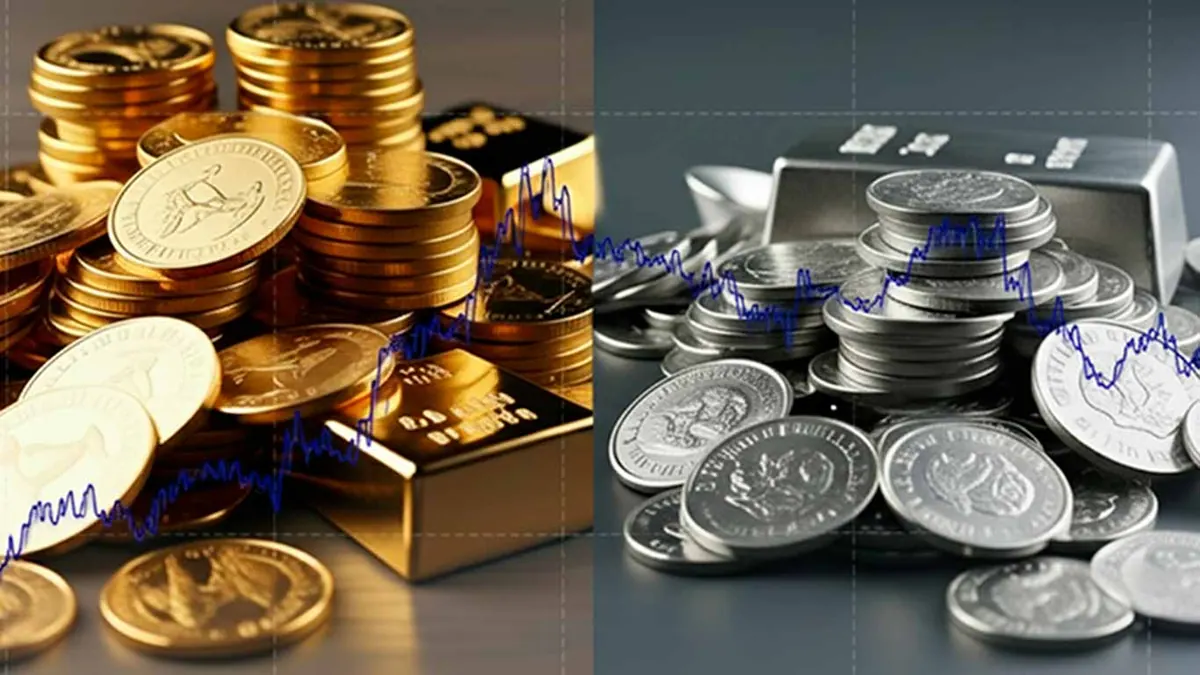
The gold-to-silver ratio measures how many ounces of silver it takes to purchase one ounce of gold, serving as an important indicator for investors to gauge the relative value between these two precious metals and identify potential trading opportunities in the precious metals market.
| Key Takeaways |
|---|
| The current high ratio of over 80:1 means silver could gain about 25% more than gold just by returning to its normal average ratio of 65:1. |
| History shows that when the ratio reaches 80:1 or higher, silver typically becomes a better buy than gold. |
| Solar panels need about 20 grams of silver each, and by 2030, this could consume nearly 20% of all silver mined annually. |
| Some investors swap one ounce of gold for 80+ ounces of silver when the ratio is high, then trade back when it drops. |
| Silver prices change more rapidly on a percentage basis than gold does because half its demand comes from industries like electronics and solar energy. |
| OWNx makes it easy to shift between gold and silver as prices change without buying and storing physical metals yourself. |
What the Gold To Silver Ratio Reveals About Precious Metals Markets
The gold-to-silver ratio is simple math. Take the current price of gold and divide it by the current silver price. This gives you a real-time snapshot of how these two metals value against each other.
Here’s how it works: When gold trades at $4,032 per troy ounce and silver at $49 per troy ounce, you get a ratio of about 82:1. That means you’d need 82 ounces of silver to buy one ounce of gold right now.
A higher ratio indicates gold is expensive compared to silver. A lower ratio means silver costs more relative to gold. Smart investors watch these shifts to time their moves between the two metals.
Current Live Precious Metals Prices
Tracking the gold silver ratio starts with knowing today’s prices. These numbers move throughout each trading day, giving you fresh opportunities to spot good entry points.
Gold per troy ounce: $
Silver per troy ounce: $
Divide the gold price by the current silver price and you’ve got your ratio. Check these prices on a daily basis if you’re serious about timing your precious metals purchases.
The ratio shifts faster than either metal alone. That’s why many investors track it multiple times per day to catch the best moments for portfolio diversification between physical gold and physical silver.
Historical Context of the Gold to Silver Ratio
For centuries, governments seeking monetary stability locked in fixed ratios between gold and silver. The Roman Empire set theirs at 12:1. The U.S. Coinage Act of 1792 made it 15:1.
The 20th century average ratio hit 47:1. But after governments dropped the gold standard in the 1970s, everything changed. Since then, the average ratio settled around 65:1. The ratio got much more volatile once the fixed ratio system ended.
Gold Price History and Market Trends
Looking at gold price history shows how this metal responds to crises, inflation, and monetary policy shifts. Physical gold has been the go-to safe haven through market crashes and currency problems.
Gold closed at $4,346.95 per oz on Sep 16, 2026.One year earlier it was $3,689.99.The interactive chart needs JavaScript.
| Period | Date | Close | Change to now |
|---|---|---|---|
| Latest close | Sep 16, 2026 | $4,346.95 | — |
| 1 year ago | Sep 16, 2025 | $3,689.99 | +17.8% |
| 5 years ago | Sep 16, 2021 | $1,753.02 | +148.0% |
| All-time high (close) | Jan 28, 2026 | $5,437.29 | -20.1% |
The chart shows gold’s major moves. During 2008, gold climbed from under $800 per troy ounce to over $1,900 by 2011. The 2020 pandemic pushed it above $2,000 for the first time.
The biggest move came in 2024-2025 when gold surged past $4,000 per ounce. Central banks bought record amounts, creating a demand floor under prices. They weren’t trading—they were building reserves against monetary instability.
How the Gold-Silver Ratio Predicts Future Prices
Ratio Swings During Bull Markets
The gold-to-silver ratio has predictive power at extremes. When it spikes above 100:1, it signals fear and a run to gold, leaving silver to be undervalued before massive silver rallies.
In 1991, the ratio peaked near 100:1 during a silver bear market. Silver then surged 60% as the ratio compressed. March 2020 was even more dramatic—the ratio hit 126:1 as COVID panic took hold. Silver then rallied 140% over the following months.
The current ratio around 82:1 sits above the long-term average but below panic levels. This suggests silver has room to catch up in the short term, especially if industrial demand stays strong.
Using the Current Ratio to Time the Market
When the ratio exceeds 80:1, history says silver becomes cheap compared to gold. Mean reversion is the key concept—the ratio naturally swings back toward its average of 65:1. At 82:1 versus 65:1, that implies about 20% more upside for silver versus gold.
Some investors accumulate silver positions gradually when the ratio hits 75-80:1, knowing mean reversion favors them over the medium term. If the ratio moves to the extremes, the smart move would be to play this ratio if you have sufficient liquidity in trading physical metals.
Silver Price History and Industrial Demand Growth
Silver prices reflect both industrial demand and investment appeal. Unlike gold that sits in vaults, silver gets consumed in solar panels, electronics, and medical devices. The silver market swings harder than gold because of this dual role, creating both higher risk and higher potential returns during bull markets in precious metals.
Silver closed at $64.51 per oz on Sep 16, 2026.One year earlier it was $42.58.The interactive chart needs JavaScript.
| Period | Date | Close | Change to now |
|---|---|---|---|
| Latest close | Sep 16, 2026 | $64.51 | — |
| 1 year ago | Sep 16, 2025 | $42.58 | +51.5% |
| 5 years ago | Sep 16, 2021 | $22.91 | +181.6% |
| All-time high (close) | Jan 28, 2026 | $117.23 | -45.0% |
Silver’s explosive moves tell the story. The 1980 Hunt Brothers episode briefly hit $50 per troy ounce. The 2011 peak reached $49. Most recently, silver broke out dramatically in 2024-2025.
After years below $30, silver surged past $35 in mid-2025, then pushed toward $50. By mid-October 2025, silver peaked near $54.47—its highest level in over a decade. As of early November 2025, silver trades around $48-49 per troy ounce, up roughly 50% year-over-year. Breaking above $35 per ounce mattered. This level was the monthly closing high from 1980—resistance that held for over forty years.
What Drives Gold and Silver Prices Differently
Physical Gold as a Monetary Asset
Physical gold works as money in modern markets. Central banks hold over 35,000 tonnes as reserves. Governments seeking monetary stability have ramped up gold purchases since 2022, buying record quantities.
Gold responds to interest rates and geopolitical risk. When central banks cut rates, holding non-yielding gold gets more attractive. When tensions flare, gold rallies as the ultimate safe haven.
Silver’s Industrial Applications and Market Dynamics
About 55% of silver demand comes from industrial applications, not investment. This makes the silver market respond to economic cycles differently than gold.
Electronics use silver for conductivity. Medical applications use its antibacterial properties. Solar panels are now the big story—each one needs about 20 grams of silver. As solar installations accelerate for climate goals, this single use could eat up 15-20% of total silver supply by 2030.
Silver prices move with economic cycles. During expansions, industrial demand lifts silver even when safe-haven demand drops. During recessions, industrial demand collapses, hitting silver harder than gold.
The silver supply situation looks tight. Unlike gold, that gets stored and recycled, most silver gets consumed where recovery isn’t practical. Declining ore grades and limited new mines mean silver supply faces constraints just as industrial demand accelerates.
Gold Silver Ratio Analysis in Late 2025
Late 2025 shows extraordinary strength in both metals. Gold hit an all-time high near $4,379 per troy ounce before pulling back. The gold price now sits around $4,010 per ounce.
The current silver price of approximately $49 per troy ounce represents silver’s peak near $54 earlier in the period—its highest level in over a decade.
The current ratio calculates to roughly 82:1. That’s a major compression from when the ratio exceeded 100:1 in early 2024. The compression came from institutional buying of silver as major funds recognized the metal’s dual appeal—industrial growth plus monetary hedge.
Solar expansion, 5G deployment, and electric vehicle adoption all support silver’s industrial demand.
Investing Strategy Using the Gold to Silver Ratio
When to Buy Gold vs. Buy Silver
Strategic investors use the gold silver ratio tactically. The basic rule: buy more gold when the ratio falls below 50:1. Buy silver when it exceeds 75-80:1.
This works because both metals trend together long-term, but their relative performance swings short-term. Many investors target 70% gold and 30% silver for precious metals holdings.
Trading Gold and Silver Bullion Based on Ratio
Sophisticated investors trade between gold bullion and silver bullion based on ratio extremes. When it exceeds 80:1, sell one ounce of gold and buy 80+ ounces of silver. If it compresses to 60:1, sell 60 silver ounces to buy back one gold ounce—pocketing 20+ silver ounces as profit.
This works with gold coins, silver coins, or larger bars of bullion. At OWNx, we help investors capitalize on these dynamics by offering fractional ownership of both metals, letting you adjust your precious metals portfolio as the ratio shifts—whether accumulating silver when it’s cheap relative to gold or building physical gold for monetary stability.
Understanding Risk in Precious Metals Trading
Every strategy has risks. The ratio can hit irrational levels and stay there for extended periods. One ounce of physical metal needs vault space, insurance, and security.
Physical gold and physical silver give you complete ownership outside financial institutions. Mining stocks and futures offer leverage but add risks beyond metal prices—company management, operations, and settlement issues.
Silver Supply and Demand Fundamentals
Mine production runs about 9:1—nine ounces of silver mined for every one ounce of gold. That’s way below the current price ratio of 82:1, suggesting silver is undervalued versus its geological scarcity.
Unlike gold, where all the metal ever mined stays available, most silver ever produced has been consumed in industrial applications. Silver recycling only covers a fraction of demand.
The solar revolution is the biggest new silver demand source in decades. Current solar panels need about 20 grams of silver per panel. With installations accelerating for climate goals, solar could consume 15-20% of total annual silver supply by 2030.
The silver market is surprisingly small—about $39 billion annually. Future industrial demand looks certain—EVs need more silver than traditional cars, 5G networks demand silver for electronics, and medical uses keep growing.
Making Informed Decisions in the Precious Metals Market
Active traders watch ratio shifts to identify entry points for the same amount of dollar investment. A 5% ratio shift creates meaningful opportunities by buying whichever metal offers better relative value.
Both metals serve distinct roles. Gold functions as the ultimate safe haven during maximum stress. Silver offers growth potential and industrial leverage gold can’t match. A common approach holds 60-80% gold for monetary properties and stability, with 20-40% silver for growth potential.
Conclusion
The current ratio of around 82:1 signals an opportunity in silver. With the ratio above its long-term average of 65:1, silver offers roughly 25% more upside potential than gold from mean reversion alone.
Central banks continue buying gold for monetary stability. Industrial applications for silver keep accelerating. Both metals show strength, but silver’s relative undervaluation creates compelling opportunities for investors who understand the ratio dynamics. Understanding how these two metals relate helps you navigate bull markets and position your holdings for portfolio diversification and maximum advantage.
OWNx makes strategic metals investing accessible through fractional ownership of both gold and silver. The liquidity that the platform provides is unique in the marketplace, enabling investors to easily buy and sell the physical metal online and thus take advantage of the gold-to-silver ratio.
FAQs
What is the gold-silver ratio, and why does it matter?
The gold-silver ratio shows how many ounces of silver you need to buy one ounce of gold. Right now it sits around 82:1. Investors use this ratio to decide which metal offers better value at any given time.
What is a good gold-to-silver ratio for buying silver or gold?
The post-1970s average ratio is 65:1, making this the neutral zone. Ratios above 80:1 signal silver is cheap and a good buy. Ratios below 50:1 mean more gold is the better choice as silver becomes expensive relative to gold.
How do gold and silver prices move differently?
Gold and silver prices often move together, but silver swings much harder in both directions. Gold responds mainly to economic fear, while silver gets pulled by both investment demand and industrial uses like solar panels and electronics.
Should I track the silver ratio daily or weekly?
Active traders watch the silver ratio daily to catch short-term opportunities, while long-term investors can check weekly or monthly. The best buying opportunities often take weeks or months to develop.
Are silver coins better than bars for ratio trading?
Silver coins offer better flexibility for smaller trades but cost more per ounce due to premiums. Larger bars give you lower costs, but coins make it easier to sell exact amounts you need when trading between metals.
How does OWNx help with ratio-based investing?
OWNx offers fractional ownership of both metals, making it simple to shift your allocation as the ratio changes. You can adjust between gold and silver without dealing with physical storage or buying and selling coins yourself.