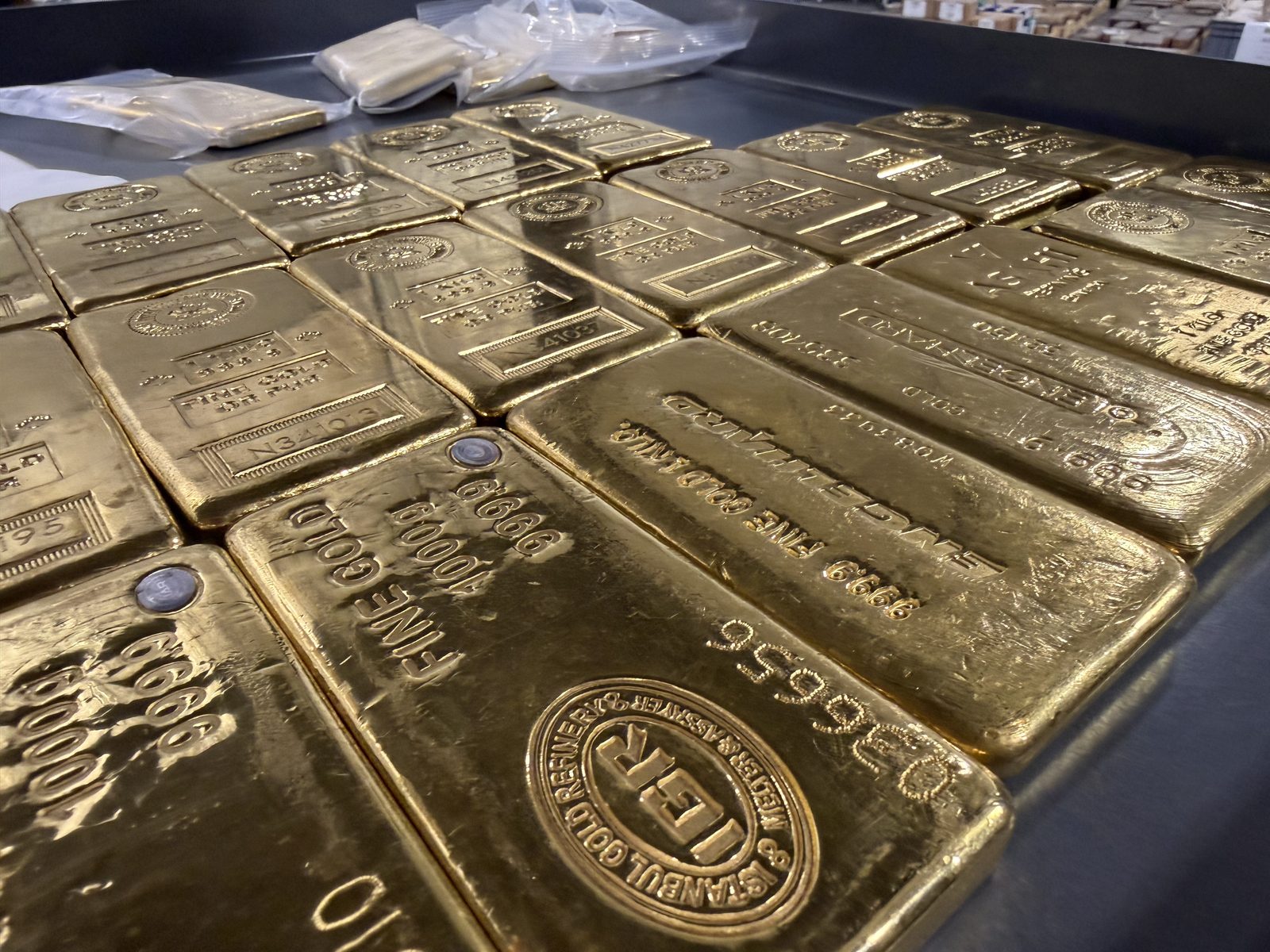

The U.S. dollar lost roughly 10% of its value against major currencies between January 2025 and March 2026, and no major credit agency now rates U.S. sovereign debt at the highest tier. To prepare for further dollar weakness, diversify into physical gold and silver, build liquid reserves covering three to twelve months of expenses, and pay down high-interest debt before conditions tighten further.
A dollar collapse, while rare, could lead to massive disruptions worldwide. With national debt crossing $39 trillion, the Dollar Index down roughly 10% from its January 2025 peak, and gold surging 66% in 2025 alone, the warning signs are no longer subtle. Preparing now means building a portfolio that holds its value whether the dollar weakens gradually or declines sharply
| Key Takeaways |
|---|
| Gold surged 66% in 2025, its strongest annual performance since 1979, reaching an all-time high above $5,500 per ounce in January 2026. |
| U.S. national debt crossed $39 trillion in March 2026, growing at approximately $7.23 billion per day, with annual interest payments exceeding $1 trillion for the first time. |
| The Dollar Index fell roughly 10% from its January 2025 peak, and the dollar’s share of global foreign exchange reserves has declined from 73% in 2001 to approximately 57% today. |
| Central banks purchased over 1,000 tonnes of gold annually for three consecutive years; gold now accounts for a larger share of central bank reserves than U.S. Treasuries for the first time since 1996. |
| Mainstream financial consensus has shifted to a 10-20% precious metals allocation in a diversified portfolio, up from a traditional 5% ceiling. |
What is a Dollar Collapse?
A dollar collapse is a rapid, severe loss of value in the U.S. dollar relative to other currencies and real assets, triggered by a loss of confidence in its stability or purchasing power. While the dollar is currently the world’s primary reserve currency, a collapse could result from rising national debt, hyperinflation, or the efforts of foreign countries like China and Russia to shift away from using the dollar in global trade. Countries like Argentina and Zimbabwe have experienced similar currency crises, which led to skyrocketing inflation and widespread financial hardship.
Today those risks are more concrete: U.S. national debt crossed $39 trillion in March 2026, and Moody’s downgraded U.S. sovereign debt from Aaa to Aa1 in May 2025, meaning no major credit agency now rates U.S. debt at the highest tier. If the dollar were to collapse, the global economy would face huge disruptions. The ripple effects would be felt worldwide, especially in international trade and financial markets.
World Economy and Global Repercussions of a Dollar Collapse
A collapse of the U.S. dollar would have far-reaching effects on the world economy, as the dollar is deeply integrated into international trade, finance, and global markets. Many countries hold their reserves in dollar-denominated assets, and the U.S. dollar serves as the primary currency for commodities like oil, gold, and other raw materials. If the dollar collapses, the global financial system would be thrown into chaos, with major disruptions in international transactions and investment.
Countries heavily reliant on the dollar, especially those that peg their currencies to it or conduct most of their international trade in dollars, would face severe economic consequences. Foreign investors may lose confidence in dollar-backed assets, leading to a sharp decline in investments in U.S. markets, and potentially causing a cascade of currency crises across other nations. In response, other currencies, such as the euro, the Japanese yen, or even the Chinese yuan, could strengthen as countries seek safer alternatives to the dollar.
The de-dollarization trend is already well underway. The dollar’s share of global foreign exchange reserves has fallen from 73% in 2001 to approximately 57% today. BRICS nations, now representing nearly half the world’s population, have accelerated the build-out of alternative payment infrastructure: 90% of intra-BRICS trade now settles in local currencies, and Russia and China settle 99% of bilateral trade in their own currencies. In late 2025, a gold-anchored digital trade settlement unit launched its prototype, backed 40% by gold and 60% by a basket of BRICS currencies.
Physical assets like physical precious metals and real estate investments would gain prominence in global investors’ portfolios as they look for tangible assets that retain value during periods of currency instability. Physical gold would likely become an even more important safe haven for foreign governments and central banks, especially as they shift dollar reserves away. Central banks have already been buying gold at record rates, purchasing over 1,000 tonnes annually for three consecutive years. For the first time since 1996, gold accounts for a larger share of central bank reserves than U.S. Treasuries. The 2026 conflict in Iran, which has pushed oil prices up approximately 30% year-to-date, demonstrates how quickly geopolitical events can translate into dollar weakness and inflationary pressure across the global financial system.
Additionally, national debt concerns would escalate, as many foreign countries hold U.S. debt in their portfolios. A devalued dollar would lead to a loss of value in these holdings, potentially triggering a global debt crisis. The Federal Reserve would face enormous pressure to stabilize the situation, but with limited tools in the case of a full-blown currency collapse.
Preserving the Dollar’s Purchasing Power
The dollar’s purchasing power has been steadily eroding due to inflation over the past century, and the pace has accelerated sharply in recent years. The Dollar Index, which measures the dollar’s purchasing power against a basket of major currencies, peaked above 109 in January 2025 before falling roughly 10% to around 100 by mid-March 2026. The dollar’s stability is under structural pressure from rising national debt and persistent inflation above the Federal Reserve’s 2% target.
Protecting your wealth from further depreciation means investing in assets that are less vulnerable to inflation. Holding hard assets like gold, silver, and real estate, which tend to maintain or increase in value when inflation rises, is one of the most time-tested approaches.Inflation increases the cost of goods and services, effectively reducing the value of your savings. By diversifying into inflation-resistant assets, you can prevent your dollar’s purchasing power from shrinking even more.
How to Prepare for Dollar Collapse: Key Strategies
One of the smartest ways to prepare is to diversify your investments. By spreading your assets across different asset classes, you can protect yourself from the fallout of any single currency’s failure. The five most important strategies are: building a precious metals allocation, maintaining liquidity, managing debt, diversifying into stable foreign assets, and monitoring key economic indicators.
Asset Classes to Consider During A Collapse
To protect your wealth, consider assets that hold or increase in value during times of economic instability.
Precious Metals (Gold, Silver, and Platinum)
Gold and silver have proven to be reliable safe-haven assets during periods of economic crisis. Unlike fiat currencies, physical precious metals cannot be printed or inflated, making them a dependable way to preserve wealth when paper money loses value.
Gold surged 66% in 2025, its strongest annual performance since 1979, and hit an all-time high above $5,500 per ounce in January 2026. Central banks purchased over 1,000 tonnes of gold annually for three consecutive years, and for the first time since 1996, gold accounts for a larger share of central bank reserves than U.S. Treasuries. Mainstream financial consensus has shifted to a 10-20% precious metals allocation in a diversified portfolio, up from a traditional 5% ceiling.
Silver offers comparable protection with a unique structural advantage. Silver’s supply deficit has persisted for six consecutive years, with demand exceeding supply by over 160 million ounces annually, driven by solar panels, electric vehicles, and AI data center manufacturing. Silver gained approximately 142% in 2025, making it one of the best-performing major assets of the year.
A portfolio split of 70% gold and 30% silver suits most moderate-risk investors. Gold coins and gold bars carry zero counterparty risk because their value does not depend on any institution’s promises.
With OWNx, diversifying with physical precious metals becomes an accessible strategy, from fractional gold from as little as $25 per month through to coins, bars, and a Gold IRA that lets you hold physical gold in a tax-advantaged account, helping you maintain purchasing power even when traditional currencies falter.
Cryptocurrencies
Cryptocurrencies like Bitcoin have become a significant alternative to traditional currencies. Their decentralized nature makes them less vulnerable to government interference or economic crises. Bitcoin, often called “digital gold,” shares key traits with precious metals, like scarcity and resistance to inflation. Following institutional adoption through exchange traded funds, Bitcoin traded in the $70,000-$150,000 range in 2026, reflecting growing mainstream acceptance.
Cryptocurrencies are highly volatile, which makes them riskier than more established assets. Limiting your exposure to a small portion of your portfolio, typically 1-5%, allows you to participate in the asset class without taking on excessive risk.
Real Estate
Real estate preserves wealth during times of economic turmoil, particularly when the dollar’s purchasing power declines. When the dollar weakens, property values generally rise, making real estate a reliable hedge against currency devaluation. Beyond capital appreciation, rental properties provide a consistent income stream that tends to keep pace with inflation.
In the event of a collapse, real estate investors would likely see the value of their holdings increase, as tangible assets like property tend to retain or grow in value during inflationary periods. Investing in U.S. real estate is one way to hedge against a declining dollar, but investors looking for additional diversification might consider foreign real estate in countries with stronger currencies or more stable economies.
For investors who prefer not to own property directly, Real Estate Investment Trusts (REITs) focused on inflation-resistant sectors, such as storage, healthcare, and apartment buildings, offer a liquid alternative without the management burden.
Real estate does require substantial capital and moves slowly when you need to sell. It is not as liquid as other investments. Managing property, particularly in foreign countries, adds complexity through local property laws, management costs, and tax obligations. Real estate works best as a preparation strategy when you have the capital, time, and knowledge to manage it effectively.
How to Allocate Across Asset Classes
Most investors preparing for dollar weakness benefit from clear allocation targets. The mainstream financial consensus has shifted to 10-20% precious metals in a diversified portfolio, up from a traditional 5% ceiling. Within that metals allocation, a 70% gold and 30% silver split suits most moderate-risk investors; more aggressive investors seeking silver’s higher upside potential might shift to a 60/40 split.
Beyond metals, inflation-protected securities like Treasury Inflation-Protected Securities (TIPS) and I-Bonds, which currently yield 4.03% with zero default risk, provide a low-cost complement. Exchange traded funds focused on precious metals or inflation-linked securities offer liquid exposure without storage costs.One rule applies across all asset classes: avoid concentrating more than 20-25% of your portfolio in any single asset. Over-concentration is the most common mistake investors make when preparing for currency weakness.
Maintaining Liquidity: Building an Emergency Fund
In any financial crisis, liquidity is key. Having cash savings that can cover essential expenses for 3-12 months is a practical baseline, depending on your income stability and risk tolerance. Even though physical assets like gold or real estate are important for long-term protection, liquid funds give you the flexibility to handle short-term challenges during a dollar collapse.
Consider building your emergency fund using high-yield savings accounts or money market funds, which offer immediate access to cash while also earning some interest. Holding a portion of those liquid reserves in historically stable foreign currencies, such as the Swiss franc or Singapore dollar, provides additional protection against dollar-specific shocks without sacrificing liquidity. Physical storage of essential items like food and water is another practical step. Stocking up on non-perishable food and keeping a supply of clean water can help you navigate potential shortages during times of economic instability.
Diversifying into Stable Foreign Currencies and International Assets
Not all diversification requires physical assets. Holding a portion of your savings in foreign currencies with a long history of stability, such as the Swiss franc and Singapore dollar, reduces your exposure to dollar-specific risks. Both currencies have maintained purchasing power through multiple global financial crises.International equities also deserve consideration. Non-U.S. stocks outperformed the S&P 500 for U.S. dollar investors in 2025 as the dollar weakened. Major asset managers have maintained overweight positions in non-U.S. investment-grade bonds and local-currency emerging markets bonds. Global markets offer returns that are less correlated with the dollar’s performance than domestic assets, making them a practical addition to any currency-aware portfolio.
Preparing for Economic Uncertainty and High Inflation
High inflation often accompanies a dollar collapse, and being prepared for it is essential. The Federal Reserve held rates at 3.50-3.75% in March 2026, with the core Personal Consumption Expenditures (PCE) measure running at 3.1%, well above the 2% target. Monetary policy remains constrained: cutting rates risks accelerating inflation, while holding them steady increases borrowing costs across mortgages, vehicle loans, and business credit.
Rising inflation means higher prices for everyday goods and services, further eroding the value of your savings. Position your portfolio with assets that can withstand inflationary pressure, such as gold, real estate, inflation-protected securities like TIPS, and foreign stocks.Managing high interest debt is equally important. Paying it down improves your financial stability and reduces the impact of rising borrowing costs. By lowering your monthly obligations, you free up more funds for essential savings and investments during a period of economic uncertainty.
Monitoring Economic Trends
Keeping an eye on economic indicators can help you stay ahead of currency instability. Four metrics are worth monitoring closely.
First, the Dollar Index (DXY): it peaked above 109 in January 2025 and had fallen to around 100 by mid-March 2026, signaling sustained dollar weakness.
Second, the PCE inflation measure: running at 3.1% in early 2026, well above the Fed’s 2% target.
Third, U.S. credit ratings: no major agency now rates U.S. sovereign debt at the highest tier after the May 2025 Moody’s downgrade.
Fourth, the gold-to-silver ratio: when this ratio exceeds 80:1, silver is historically undervalued relative to gold and has often preceded strong precious metals rallies.
Geopolitical events also have a significant impact on currency stability and global trade. The 2026 conflict in Iran and its effect on oil prices demonstrates how quickly external shocks can accelerate market volatility and economic instability. By staying informed and regularly reviewing your portfolio against these signals, you’ll be able to adjust your strategies to protect your wealth as economic conditions shift.
Common Mistakes when Preparing for a Dollar Collapse
Preparation mistakes can be as costly as no preparation at all. Five errors come up repeatedly:
Panic-buying at peak prices. Gold and silver prices are volatile. Investors who buy in a rush after alarming headlines typically pay peak prices. Dollar-cost averaging — buying a fixed dollar amount on a regular schedule — removes the pressure of timing the market and lowers your average cost over time.
Over-concentrating in a single asset. Holding more than 20-25% of your portfolio in any single asset class, including precious metals, increases risk rather than reducing it. Diversification across physical assets, foreign currencies, and inflation-protected securities is the foundation of a sound preparation strategy.
Paying excessive premiums on novelty coins. Collector and dealer-exclusive coins often carry premiums far above standard bullion rates that are difficult to recover on resale. Platforms with transparent, competitive pricing on standard gold coins and bars make it easier to build a position at fair value.
Treating precious metals as a short-term trade. Gold and silver function best as long-term insurance. Investors who buy expecting quick gains often sell during short-term pullbacks and miss the broader appreciation cycle. The current gold bull cycle has delivered roughly 200% cumulative returns since 2022, with prior cycles running 500-600% before peaking.
Withdrawing from retirement savings prematurely. Panic-driven withdrawals from retirement savings trigger taxes and penalties that can eliminate 30-40% of the withdrawn amount. Cash savings and liquid reserves should absorb short-term shocks before retirement accounts are touched.
Conclusion
Preparing for a collapsing dollar is fundamentally about diversification. By spreading your assets across precious metals, real estate, stable foreign currencies, and inflation-protected securities, you reduce your dependence on any single currency’s stability. Monitoring economic trends and adjusting your strategies accordingly are key to staying financially resilient.
OWNx offers a secure, accessible platform for investing in precious metals, helping you diversify your portfolio with assets that have stood the test of time. Whether it’s purchasing silver, setting up a Gold IRA, or adding physical gold to your retirement savings, OWNx provides a range of options to tap into the enduring stability of precious metals.
Adding these assets can help ensure that you are prepared for whatever the future holds.With gold up 66% in 2025 and central banks buying at record levels, the case for a disciplined precious metals allocation has never been more data-driven. The time to prepare is before a currency crisis, not during it.
FAQs
What happens to the US dollar if it collapses?
A dollar collapse would trigger hyperinflation, a sharp drop in purchasing power, and severe disruptions to global trade and financial markets. Historical currency crises show how fast this plays out: in Argentina in 2001 and Zimbabwe in 2008, prices doubled within months, wiping out savings and disrupting supply chains.
What is the Dollar Index and why is it important during a currency crisis?
The Dollar Index (DXY) measures the value of the U.S. dollar against a basket of major currencies, giving investors a real-time read on dollar dominance and purchasing power. The DXY peaked above 109 in January 2025 and had fallen to around 100 by mid-March 2026, a practical example of why monitoring this indicator matters
How do rising interest rates impact a potential economic collapse?
Rising interest rates increase borrowing costs across mortgages, vehicle loans, and business credit, slowing economic growth and deepening the debt burden on households and companies. The Federal Reserve faces a particularly difficult position: holding rates steady fights inflation but keeps borrowing costs elevated, while cutting them risks accelerating the currency devaluation investors are trying to hedge against.
Is now a good time to buy gold and silver?
Physical gold surged 66% in 2025 and analysts at J.P. Morgan, Bank of America, and Goldman Sachs have issued price targets above $5,000 per ounce for 2026. Rather than timing the market, dollar-cost averaging builds a meaningful position steadily over time — OWNx makes this straightforward with fractional gold purchases from $25 per month.
How does national debt impact the potential for a collapse of the dollar?
High national debt erodes confidence in the U.S. government’s ability to meet its obligations, increasing the risk of currency devaluation and economic instability. The U.S. national debt crossed $39 trillion in March 2026, with annual interest payments exceeding $1 trillion for the first time in fiscal year 2025.
What role do physical assets like precious metals play during a collapse of the dollar?
Physical precious metals act as safe havens during a collapse, retaining value when fiat currencies devalue because they carry no counterparty risk and cannot be printed. Physical gold surged 66% in 2025 and silver gained approximately 142% over the same period, demonstrating this in real time.
Are cryptocurrencies a viable investment for protecting wealth during a dollar collapse?
Cryptocurrencies offer decentralization and exist outside the traditional banking system, with Bitcoin trading in the $70,000-$150,000 range in 2026 following institutional adoption through exchange traded funds. They remain highly volatile and lack physical gold’s 5,000-year track record, making a small allocation of 1-5% appropriate as a complement rather than a primary hedge.
What are the early warning signs that the dollar is weakening?
The five key signals are a declining Dollar Index, inflation above the Federal Reserve’s 2% target, accelerating national debt growth, sovereign credit rating downgrades, and record central bank gold purchases. By early 2026, all five were active simultaneously.
What is the practical way to hold gold and silver as a dollar hedge?
Buy on a schedule rather than trying to time a crisis. Dollar-cost averaging into metal each month removes the guesswork, and it is how most people actually build a position. With OWNx you can set that up from $25 a month across gold, silver, and platinum. The metal is allocated to you and held in insured vaults, and you can sell any time without a liquidity fee. If you want physical delivery instead, you can take it.